2011 Harvesting Update
In the April 2011, the Commission allocated remaining funds
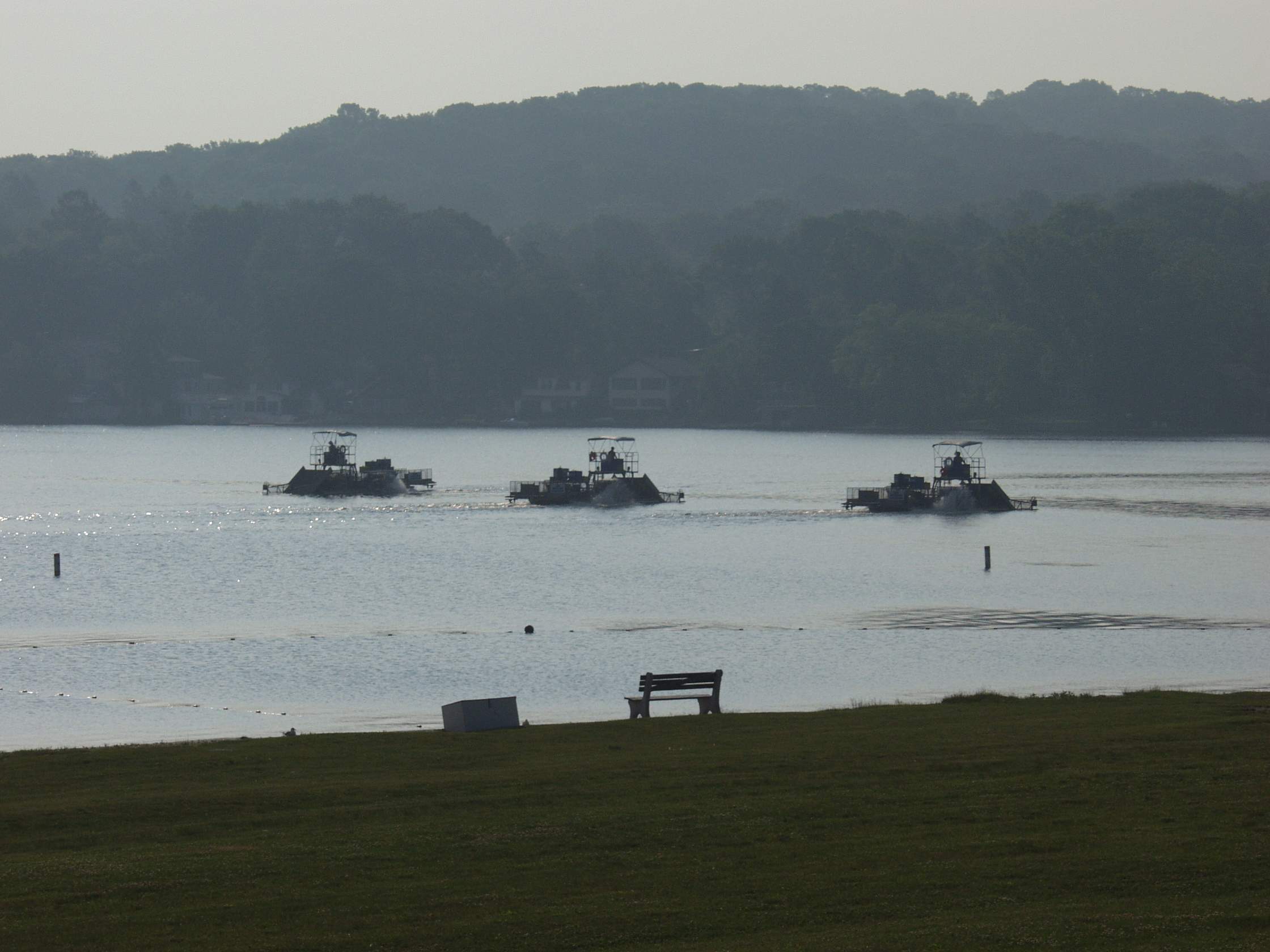
for seasonal field staff to return to work in mid-May to ready the harvesting equipment. On Monday, July 11 three harvesters began operating on the lake
down from six harvesters in years past. Commission funds would only enable
the three harvesters to operate until the end of July. In an agreement
with NJ DEP, Commission Chair Russell Felter announced at the July 25, 2011
regular commission meeting that the seasonal field staff will be reassigned to
the NJ DEP Division of Parks and Forestry effective August 1. This will
enable the harvesters to continue to operate until later into the season.
Other operating costs for the harvesting program will be funded through the
New Jersey Department of Transportation I BOAT NJ Program.
From July 11-September 14 when harvesting concluded, 554 tons of aquatic
vegetation was removed from the lake during this period. Due to high lake
level caused by Hurricane Irene and Tropical Storm Lee in late August/early
September, harvesting was suspended for five days until the lake level receded.
2010 Harvesting Update
LAKE HOPATCONG COMMISSION WAGES WAR ON AQUATIC WEEDS (NJ.com/Star-Ledger Video)
At a special meeting of the Commission on June 7, 2010 it was
announced that the Commission would receive funding for its weed harvesting
(biomass removal) program. Funds for the harvesting are provided by the
New Jersey Department of Environmental
Protection from the Corporate Business Tax (CBT) Watershed Restoration funds
for the purpose of nonpoint source management and from
New Jersey Department of Transportation I BOAT NJ Program.
The I BOAT NJ grant program
is financed by vessel registration fees to benefit the boating public.
Although it was anticipated that weed
harvesting would not commence until mid to late July, due to the lateness of securing funding
for the program, the first harvester was repaired and operational on June 30.
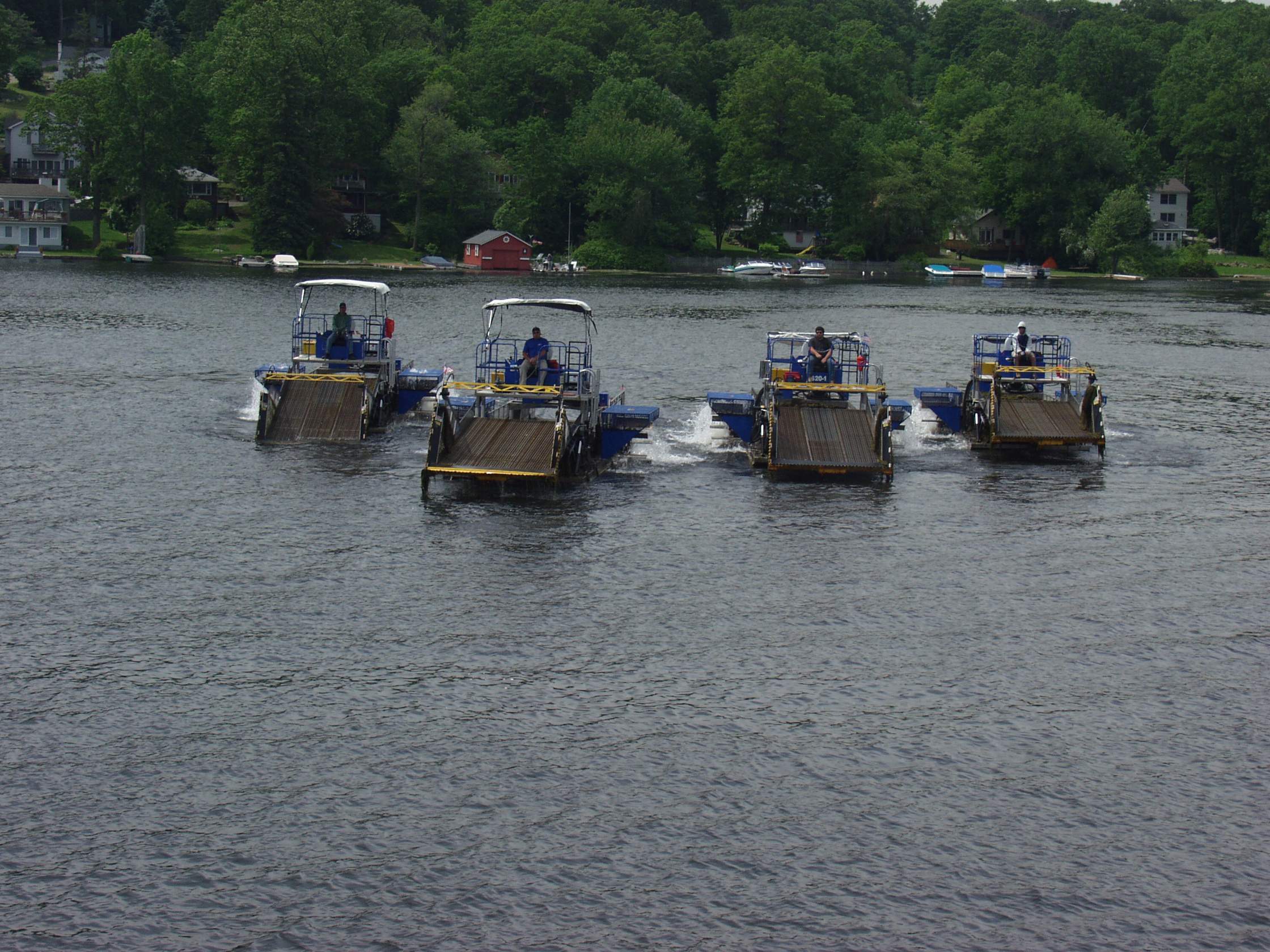
In early July, three other harvesters were repaired and the fourth and final
harvester was working on July 9. The harvesters will operate until early
September and will focus on opening navigational
channels infested with weeds. Unlike years past, the operators will not be
harvesting areas close to the shoreline, near docks or bulkheads because the
equipment will only be operational from mid to late July to early-September.
Operators will be unable to respond to requests from lakefront property owners
to harvest in a particular area.
Prevent Water Chestnut from
spreading to Lake Hopatcong
Help prevent the spread of
an extremely aggressive, non-native aquatic plant called Water Chestnut that is
rapidly taking over nearby Lake Musconetcong. First step is to educate yourself,
your family and friends and everyone that enjoys Lake Hopatcong on how to
identify the plant. Second, if you find the plant on the Lake Hopatcong,
contact the Lake Hopatcong Commission immediately at 973-601-1070.
View
photos of the devastation caused by Water Chestnut on Lake Musconetcong and
learn more ways to prevent the spread to Lake Hopatcong.
Learn more about the Lake
Hopatcong stakeholders' efforts to identify and remove water chestnut on Lake
Hopatcong. Articles are available at
lakehopatcongnews.com and
northjersey.com
Weed Disposal
Each of the four lake
municipality (Jefferson, Mount Arlington, Hopatcong
and Roxbury) have different weed disposal arrangements for its residents.
Check with your local municipality for details.
Weed Harvesting on Lake
Hopatcong
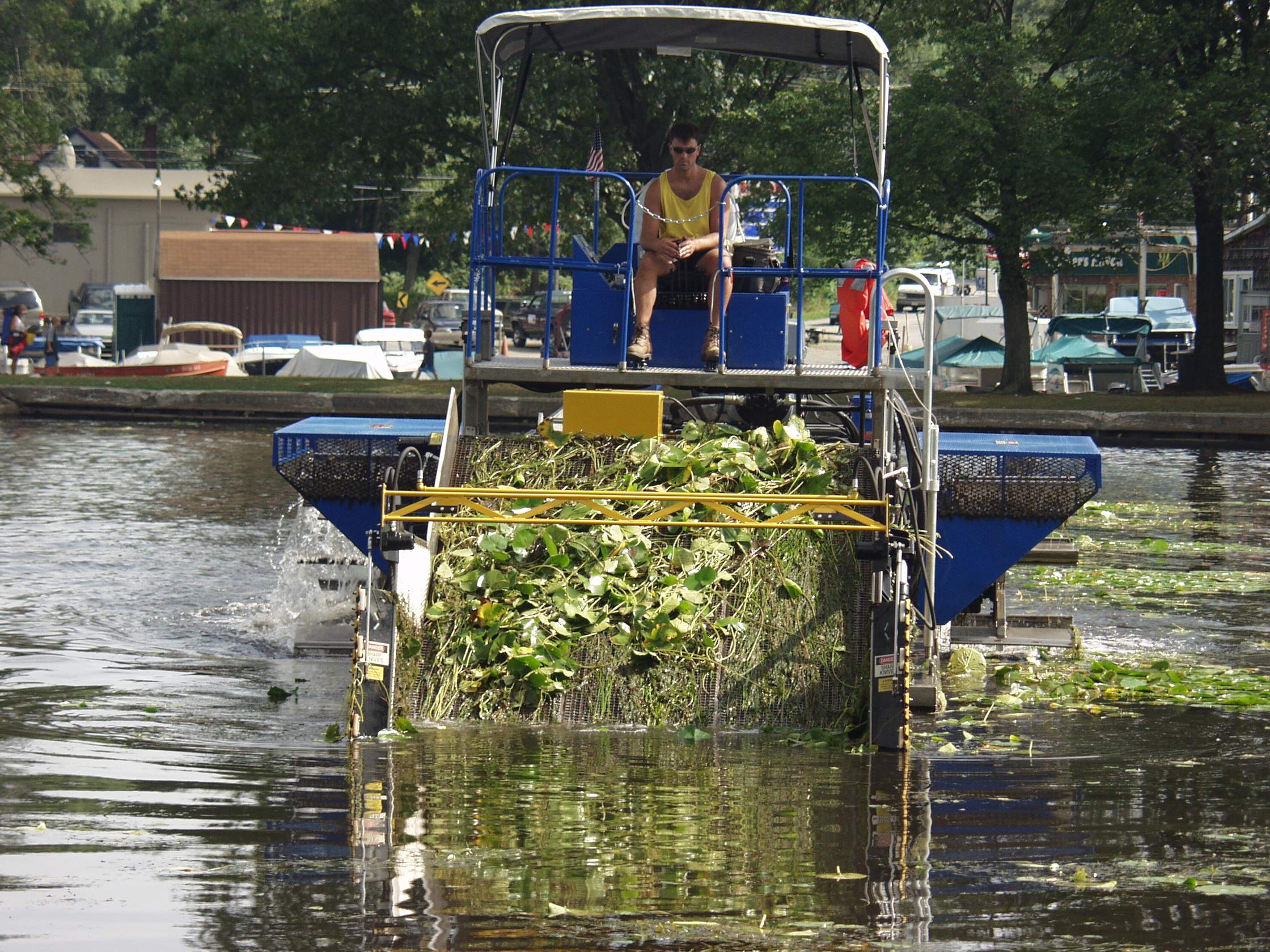
When there is adequate funding available, during harvesting season, two harvesting crews are
deployed. Many shallow sections of Lake Hopatcong are
susceptible to an abundant density of rooted aquatic plants, commonly referred
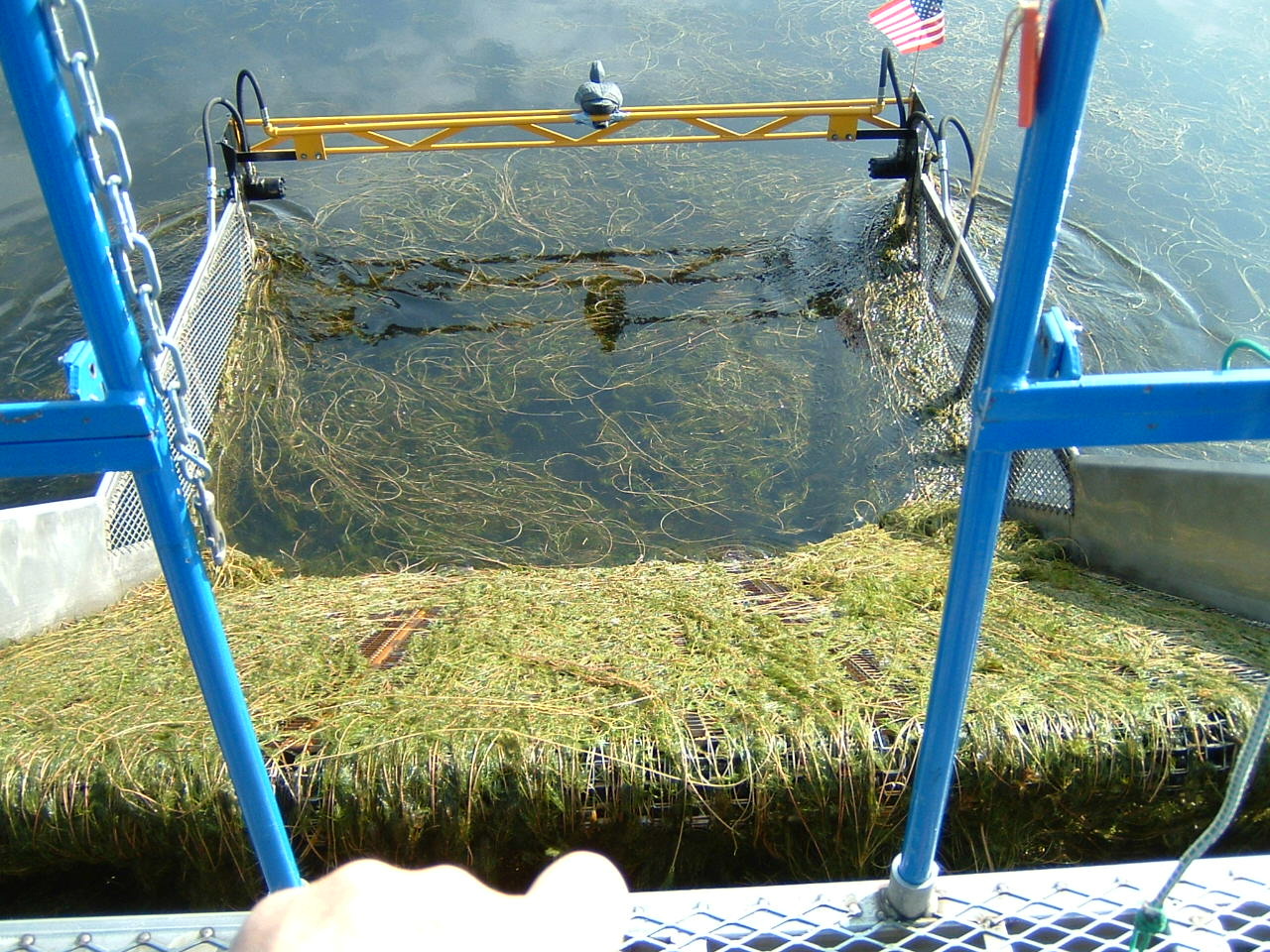
to as weeds. To harvest these areas, the harvester operator cuts the weeds
toward the center of an infested area typically closer to the middle of
the lake and will remove weeds closer to the shoreline as the harvesting is
completed in that area. Before moving to another section of the
lake, the operator will pick up floating weeds (floaters) with the
harvester near the shoreline. The operator will not harvest weeds near
rocks, in shallow water or near bulkheads.
When cutting weeds, the harvesters move at less
than 5 mph and move considerably slower if the water is choppy or if it is
windy. As an example, on a beautiful sunny day with no wind or waves, it
takes the harvester approximately 15 minutes just to travel from the Point
Pleasant in Hopatcong to the beach at the State Park when the harvester is not
cutting weeds. Under the same conditions, if the harvester was cutting one
pass from Point Pleasant to the State Park beach, it would take at least 30
minutes to harvest that distance.
In the 2008, approximately 1,100 tons of aquatic vegetation was removed from the Lake.
Due to the 60-inch drawdown of the lake which was scheduled to begin the day after Labor
Day, the harvesting operations concluded on September 17, 2008 which was
contingent upon the water
level and/or the amount of weeds
being removed.
During the off season, the LHC field staff maintains and
repairs the harvesting equipment. Additionally, through shared service
agreements with the local municipalities and County of Sussex, the field staff
clean and maintain catch basins within the Lake Hopatcong Watershed.
Click here to learn more about the
benefits of weed harvesting. To learn why the weed growth in 2006 was
so heavy, click here.
Are you interested in identifying the types of native and
invasive aquatic plants found in Lake Hopatcong or to learn about notorious
invasive species currently not found in the lake? If so, the
Identification Manual of Aquatic Plants in Lake Hopatcong and Potential Future
Invasive Species is a great learning tool.
|
|
|
|
|
|
|
|
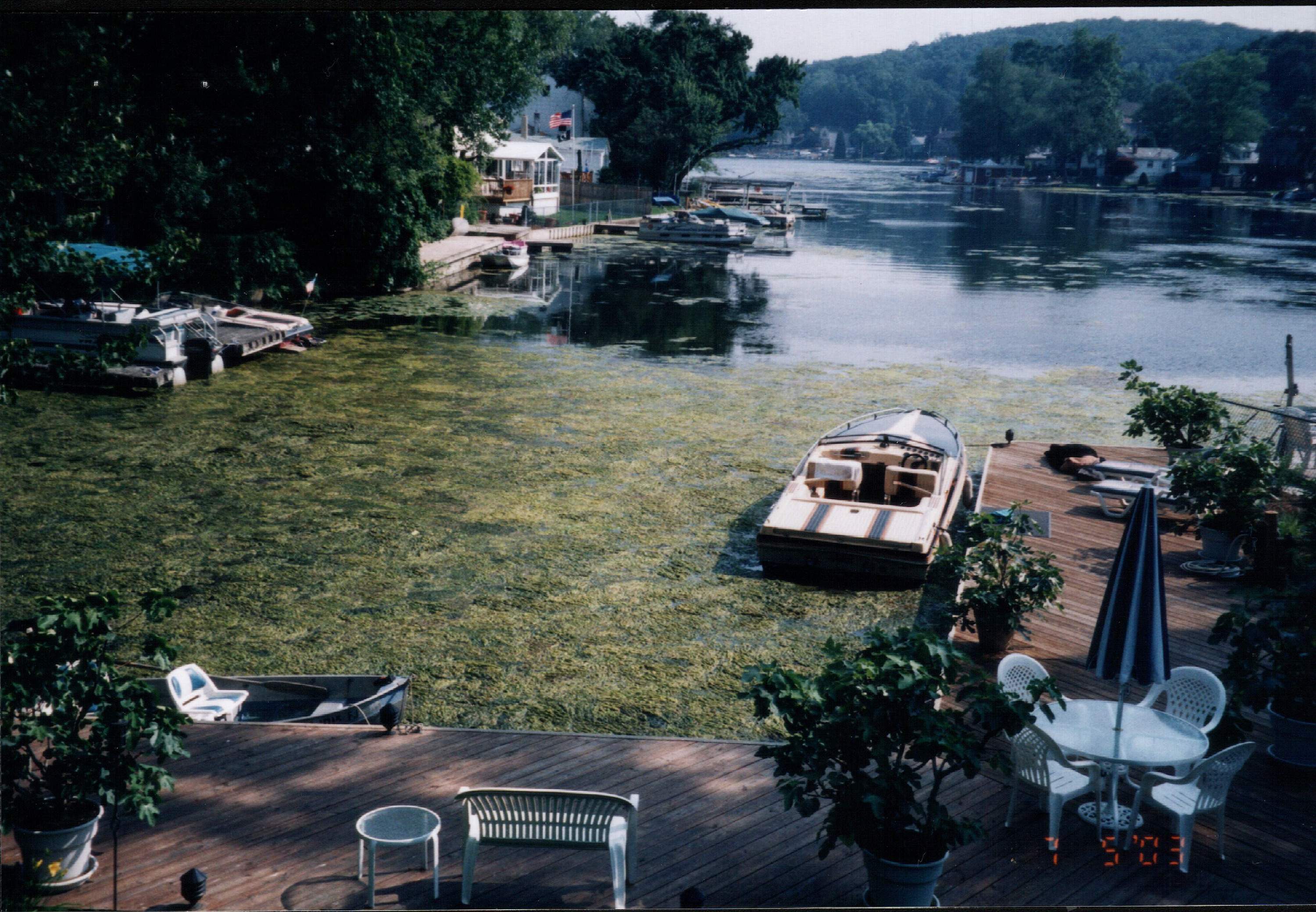
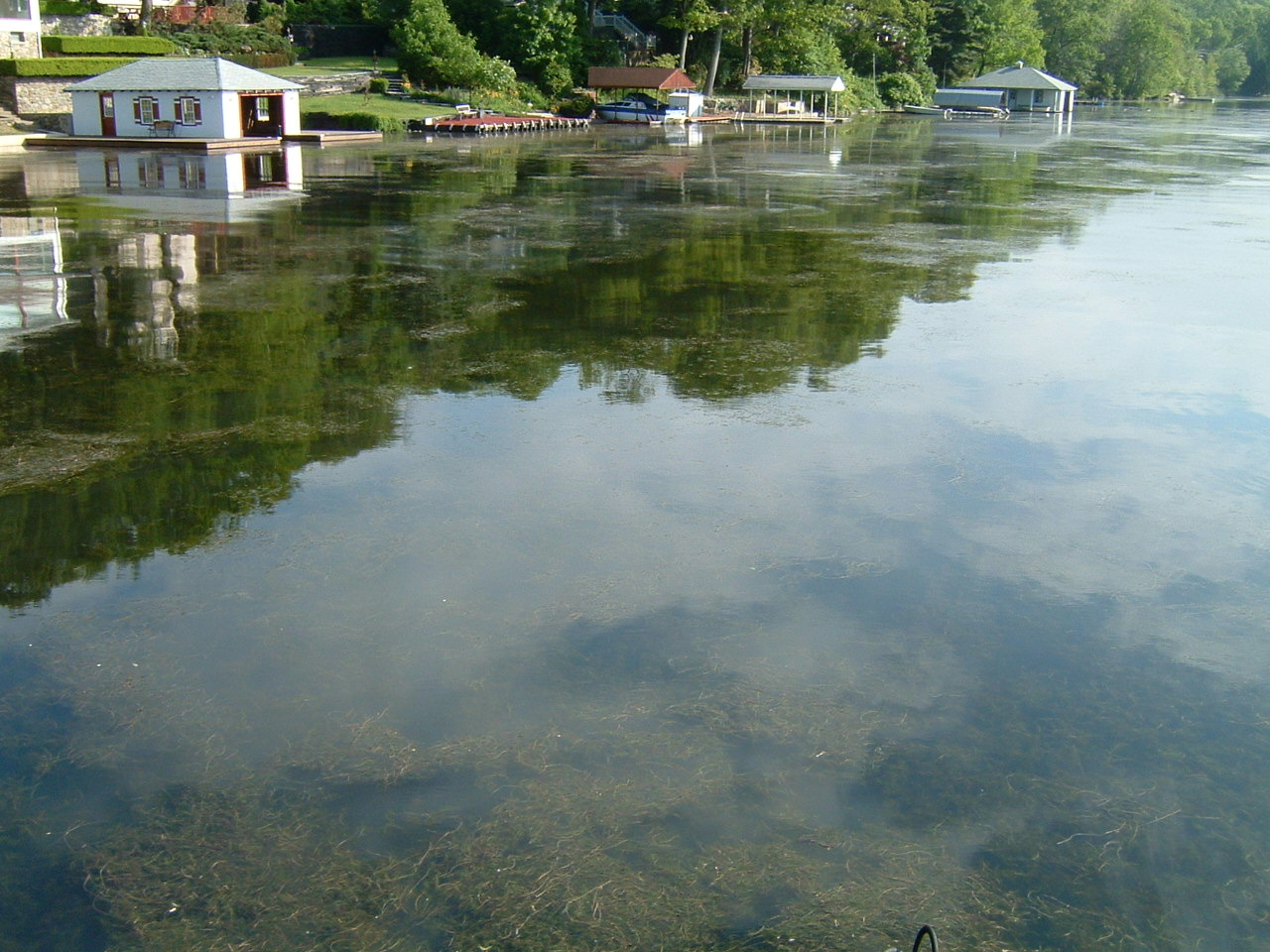
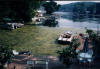
Before Harvesting |
|
Picture furnished by a Woodport Cove homeowner. |
|
|
|
|
|
|

|
|
|
|
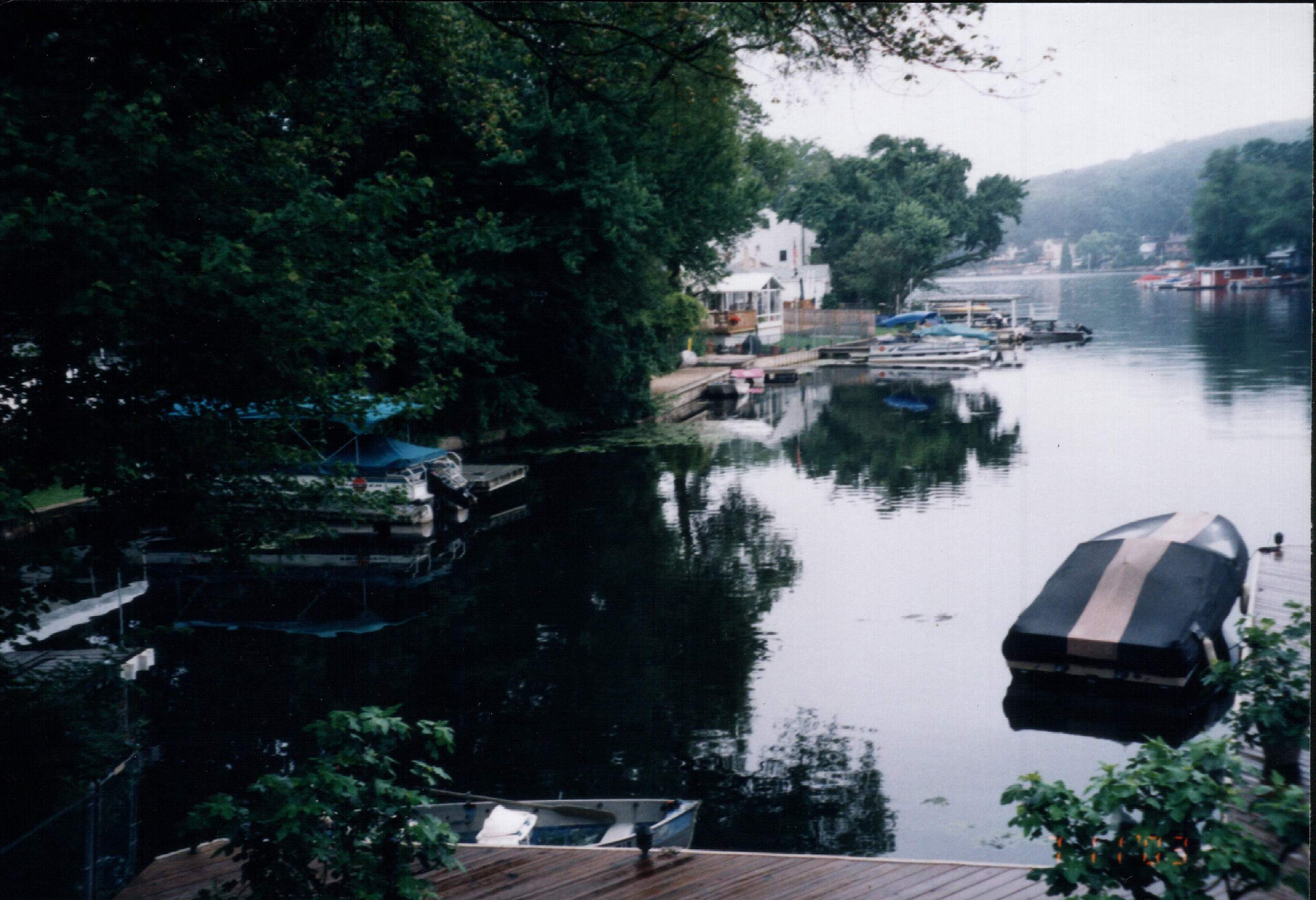
After Harvesting |
|
Homeowner sent before and after photos to former Governor McGreevey in support of continual funding for Commission. |
|
|
|
|
|
|
|
|
|
|
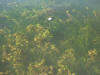
Weed Growth |
|
Under ideal conditions, some weeds can grow as much as 14 inches in length in a single week.
|
|
|
|
|
|
|
|
|
|
|
|
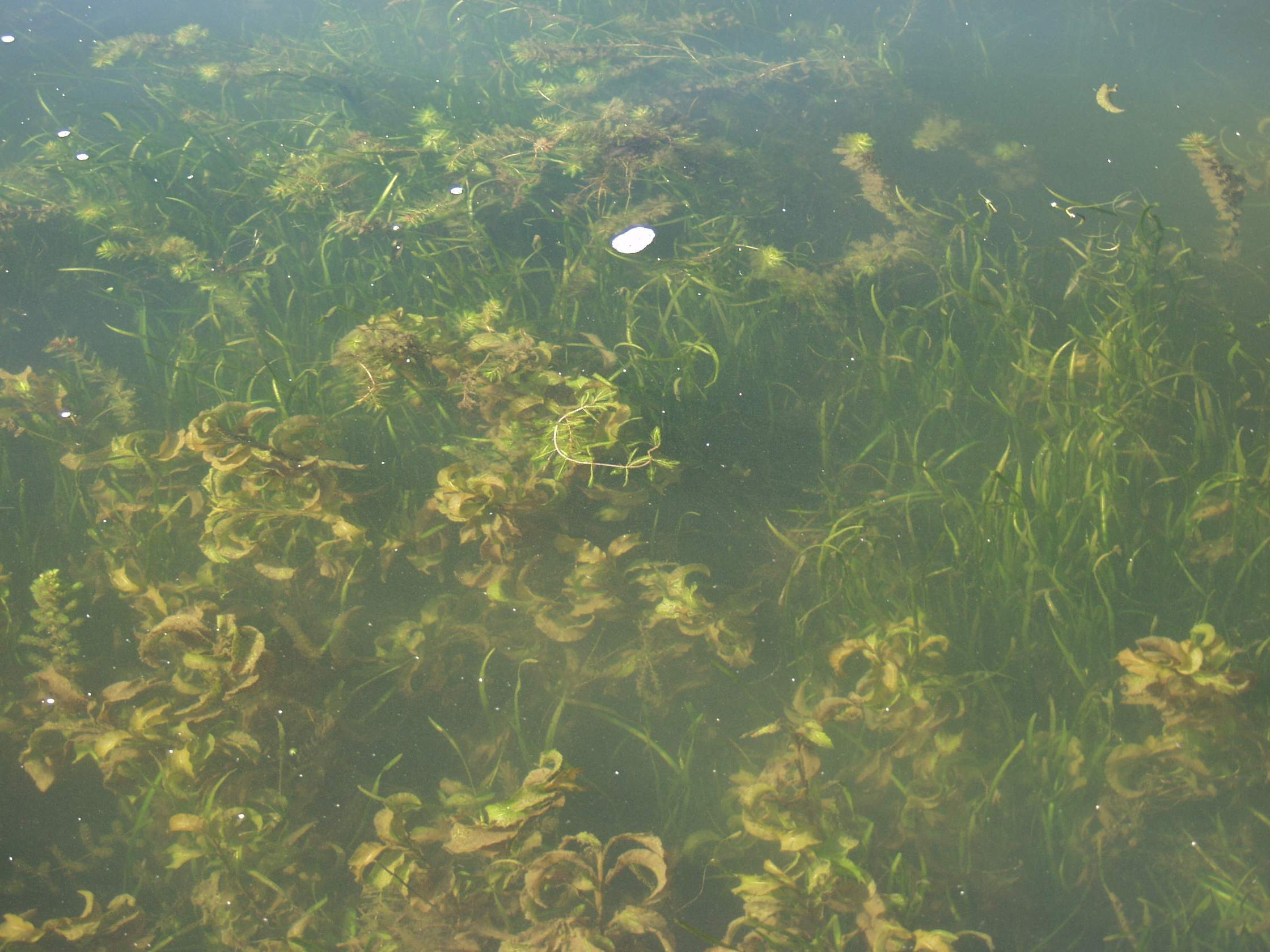
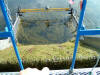
Eurasian Water Milfoil |
|
The plant stems commonly grow to lengths of 6 to 9 feet and is one of the most common weeds found in Lake Hopatcong. |
|
|
|
|
|
|
|
|
|
|
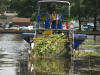
Lily Pads |
|
Only limited sections of lily pads are harvested. Others remain for fish habitat and protection. |
|
|
|
|
|
|
|
|
|
|
Phosphorous fuels weed growth |
|
Use lake-friendly, phosphorous-free fertilizer to reduce weed growth. |
|
|
|
|
|
|
|

|
|
|
|
Early Start |
|
Weather permitting, harvesters head out early each weekday morning. |
|
|
|
|
|
|
|
|
|
|
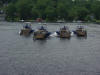
Harvester Fleet |
|
The LHC has a fleet of six harvesters and two transport barges. |
|
|
|
|
|
|
|
|
|
|
Can it Fit? |
|
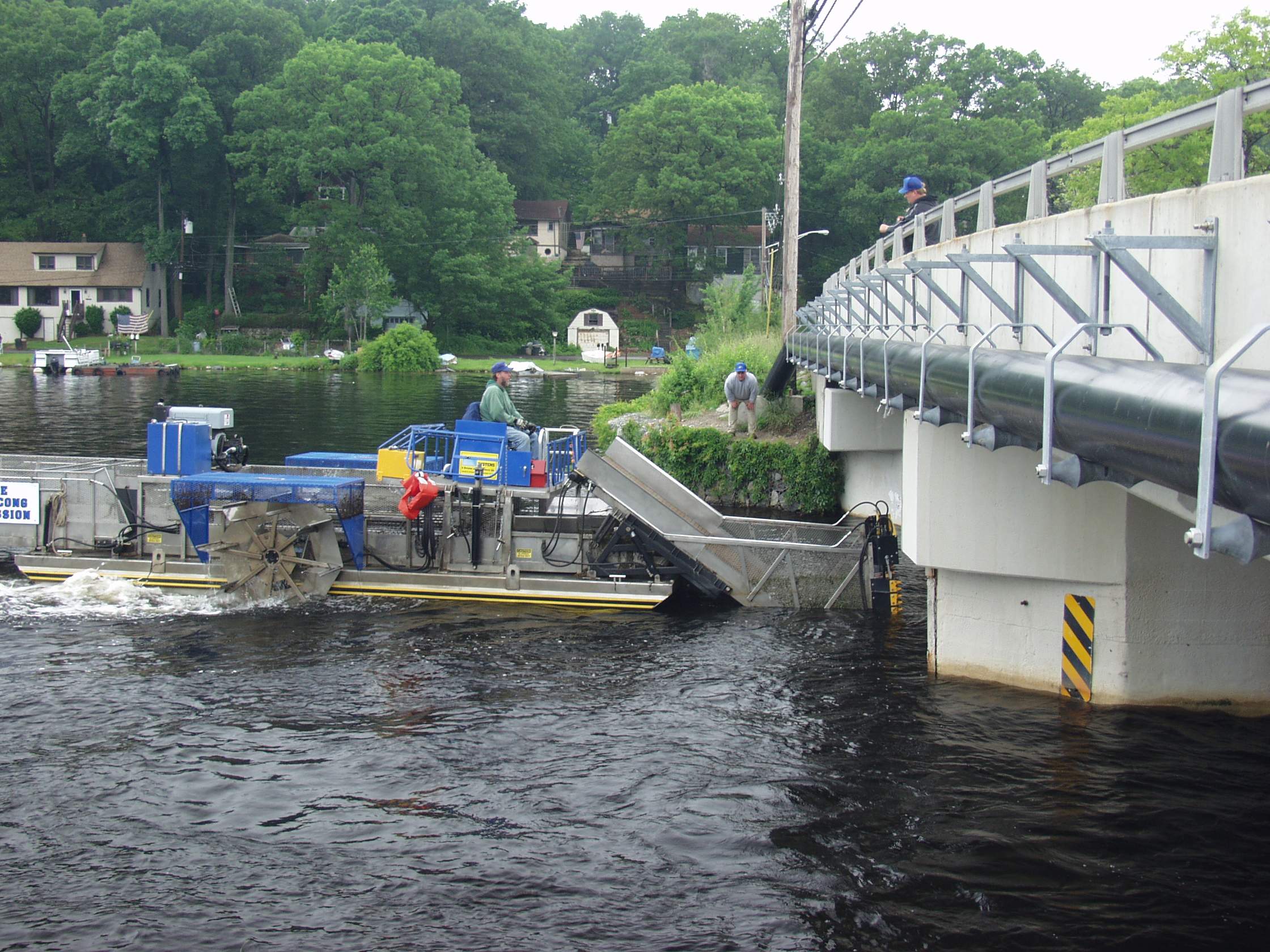
All harvesters were specifically designed to fit under Brady Bridge. |
|
|
|
|
|
|
|
|
|
|
|
Less Weed Growth |
|
River Styx Cove has significantly less weed growth now than it did when this photo was taken on June 6, 2003. |
|
|
|
|
|
|
|
|
|
|
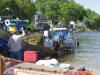
Harvesting Access |
|
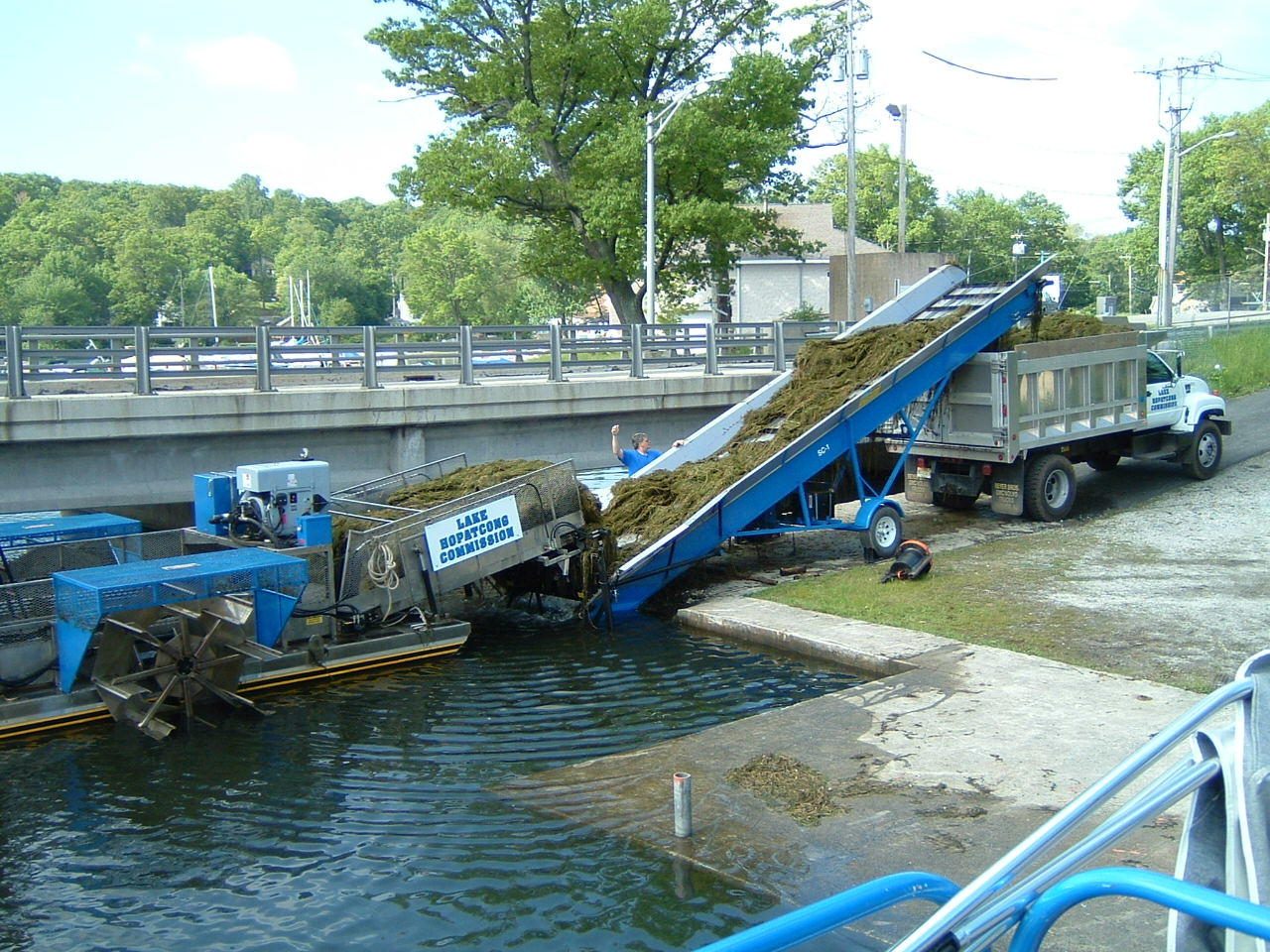
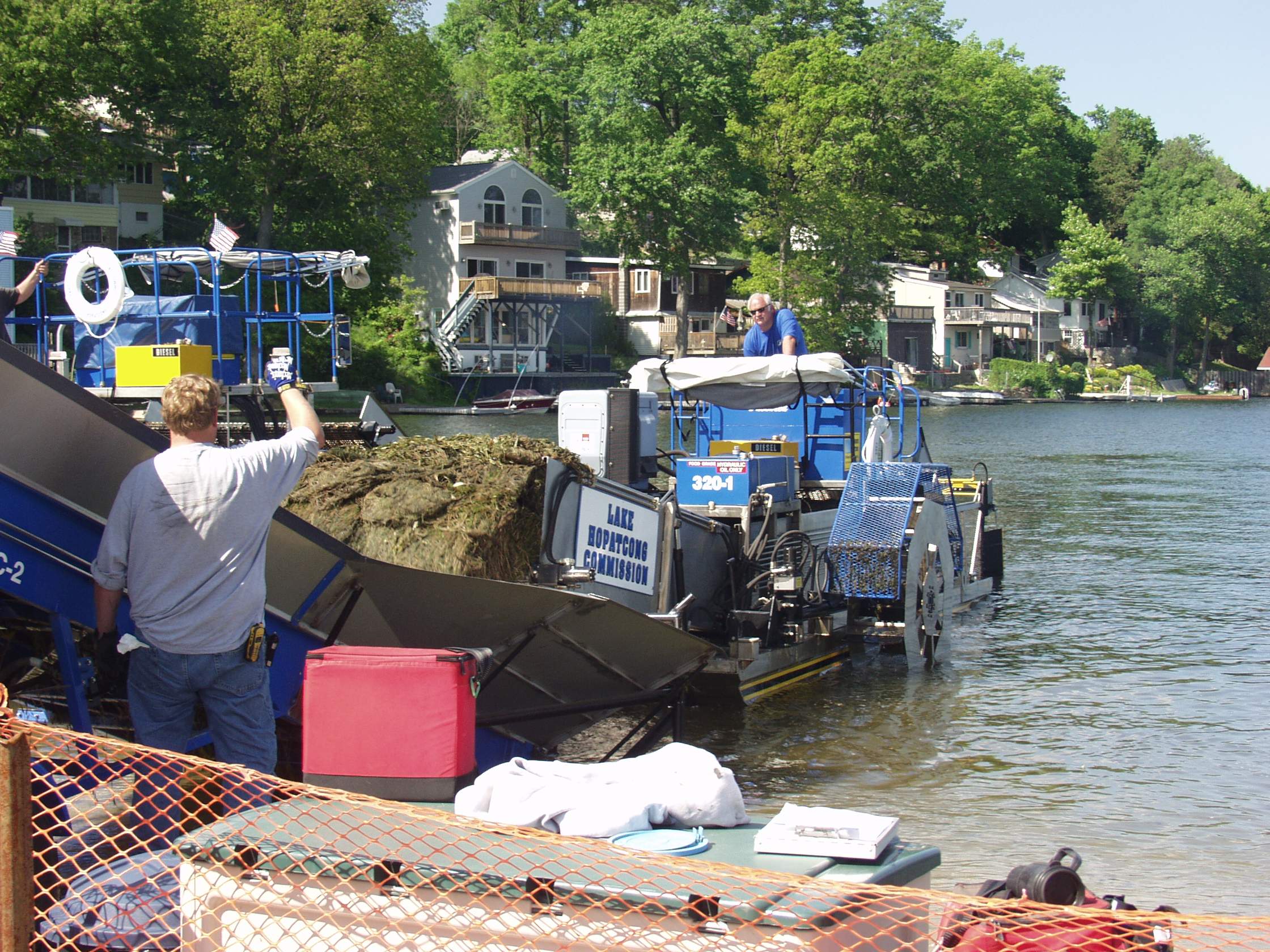
Hopatcong State Park is one of eight access locations used to harvest Lake Hopatcong. |
|
|
|
|
|
|
|
|
|
|
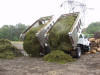
Weed Disposal |
|
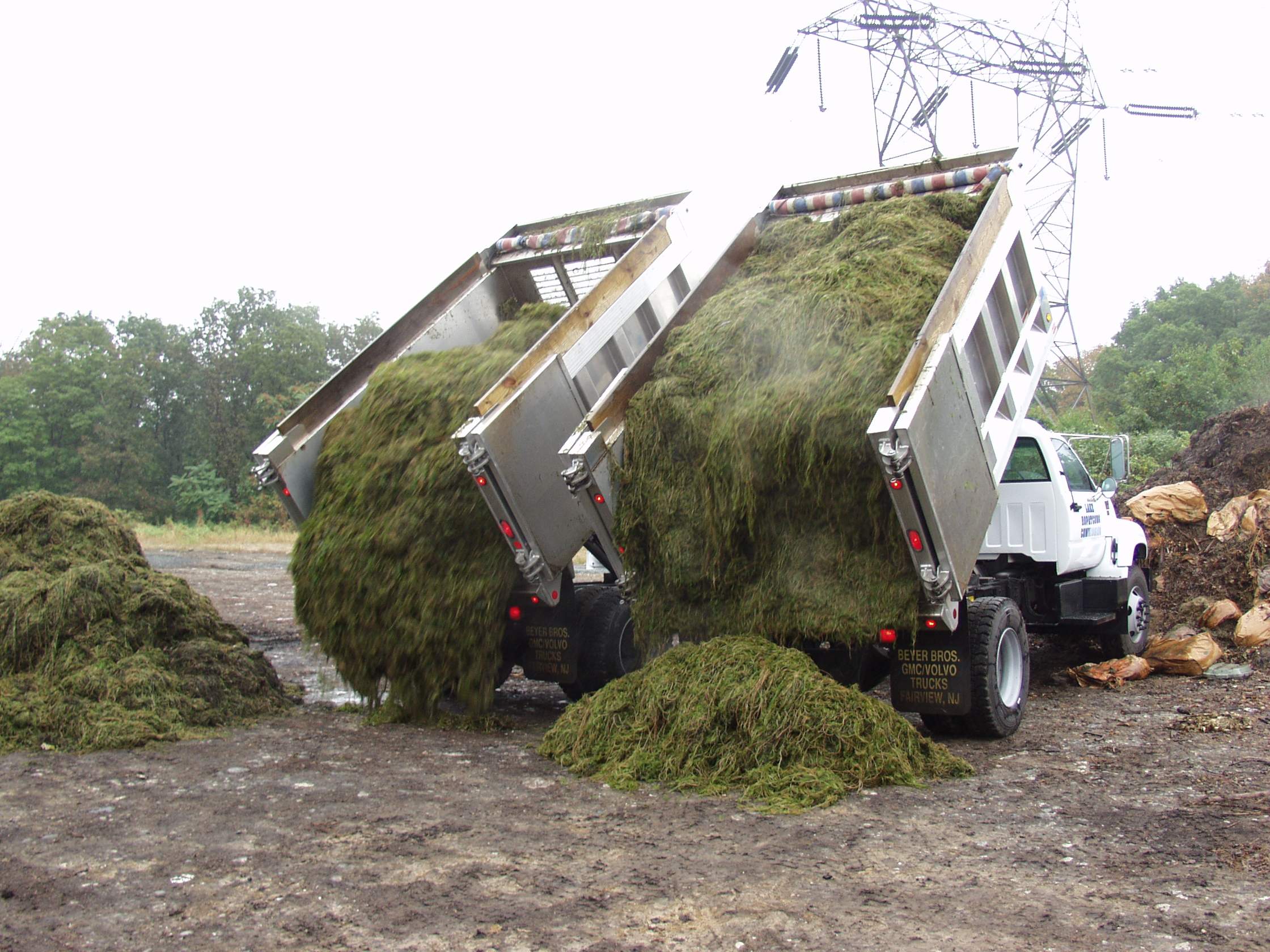
Weeds disposed at Morris County MUA are used to make top soil. |
|
|
|
|
|
|
|
Updated:
08/16/2016