|
|
|
|||||||||
|
|
|
|||||||||
|
|
|
|||||||||
|
|
|
|||||||||
|
|
|
|
|||||||||
2012 Harvesting Update
7/5/12 Update -
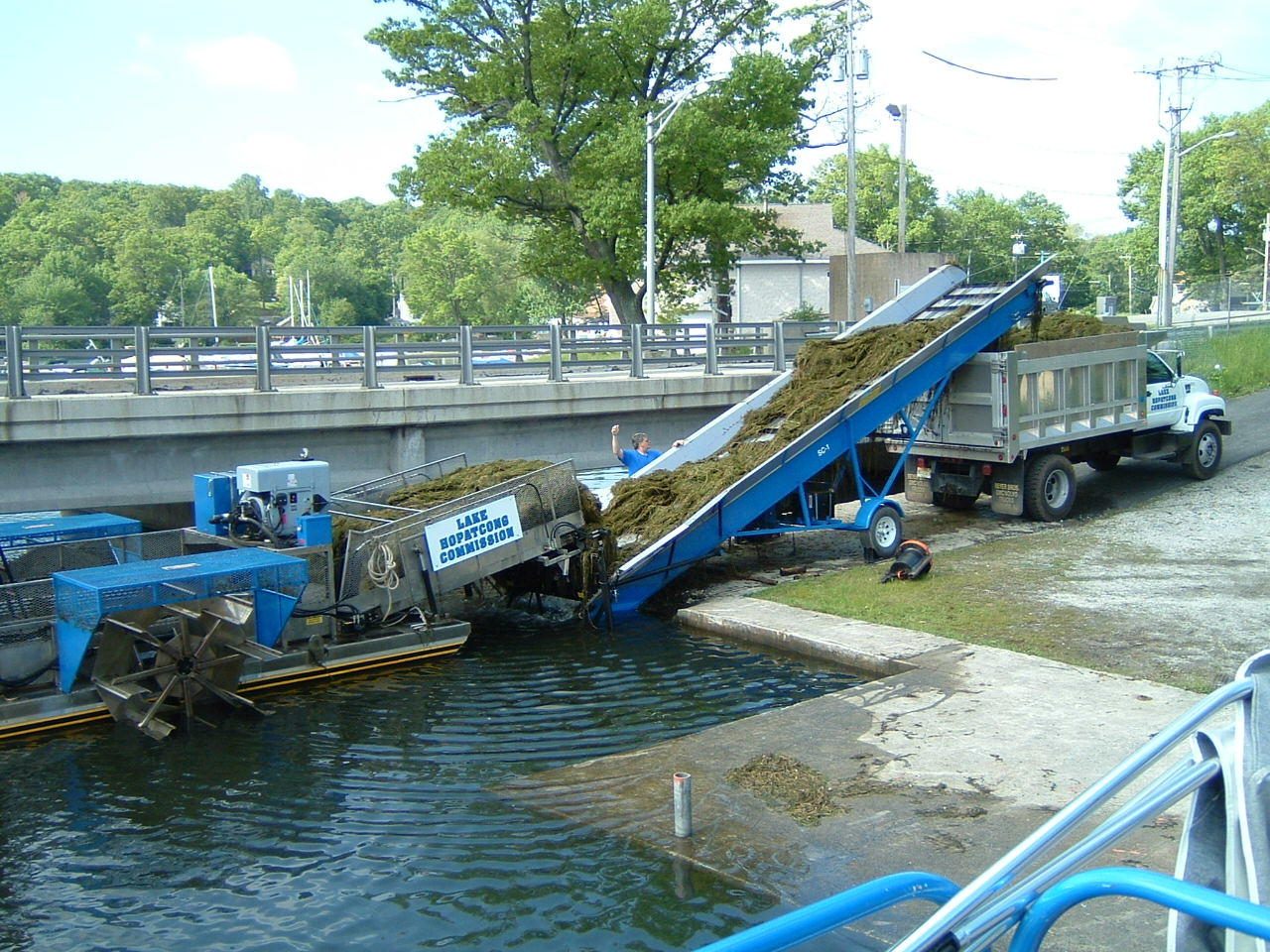
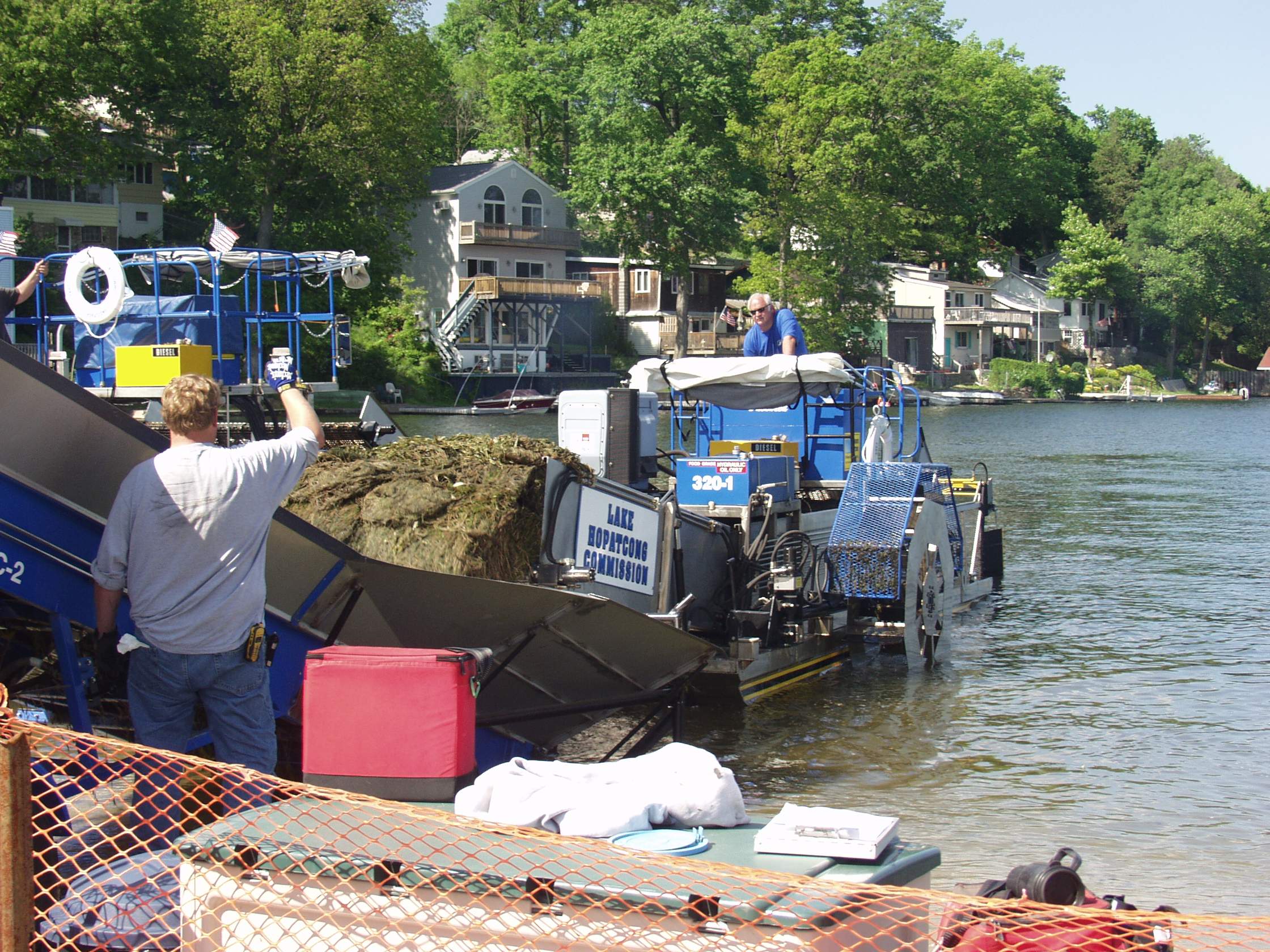
Week of June 25th two shore conveyers were mobilized on the lake.
7/2/12- First harvester was placed in the water.
7/3/12- Second harvester was put into the water.
7/5/12- Third harvester was put into the water. One harvester is docked in Lee’s Park Marina and the other two will be docked on the Northern end of the lake.
7/6/12- Fourth harvester will be launched and docked in the water at Lee’s Park Marina.
7/9/12- Harvesting will begin.
Note: The operation plan was revised due to a slightly delayed start date for two seasonal employees.
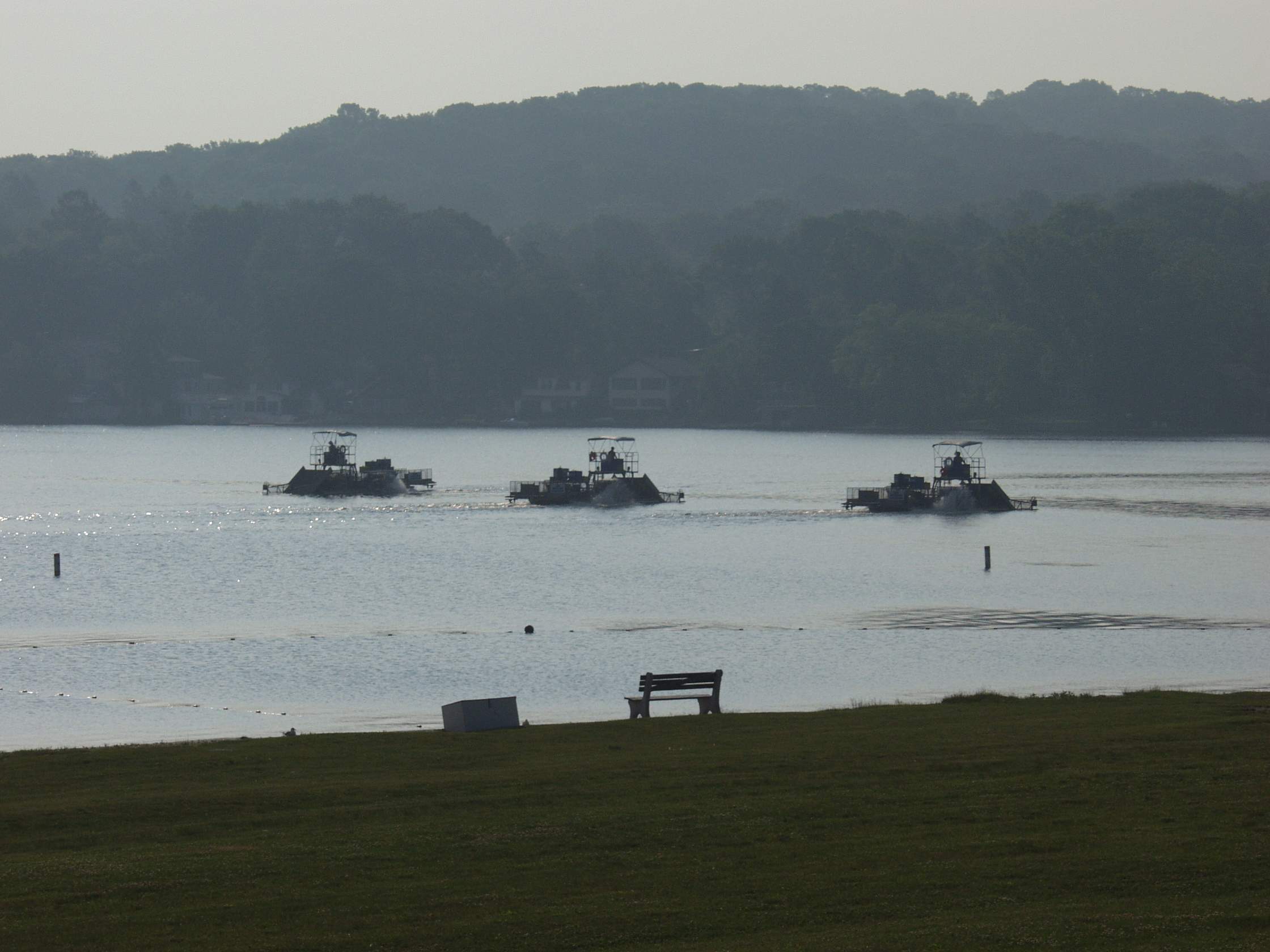
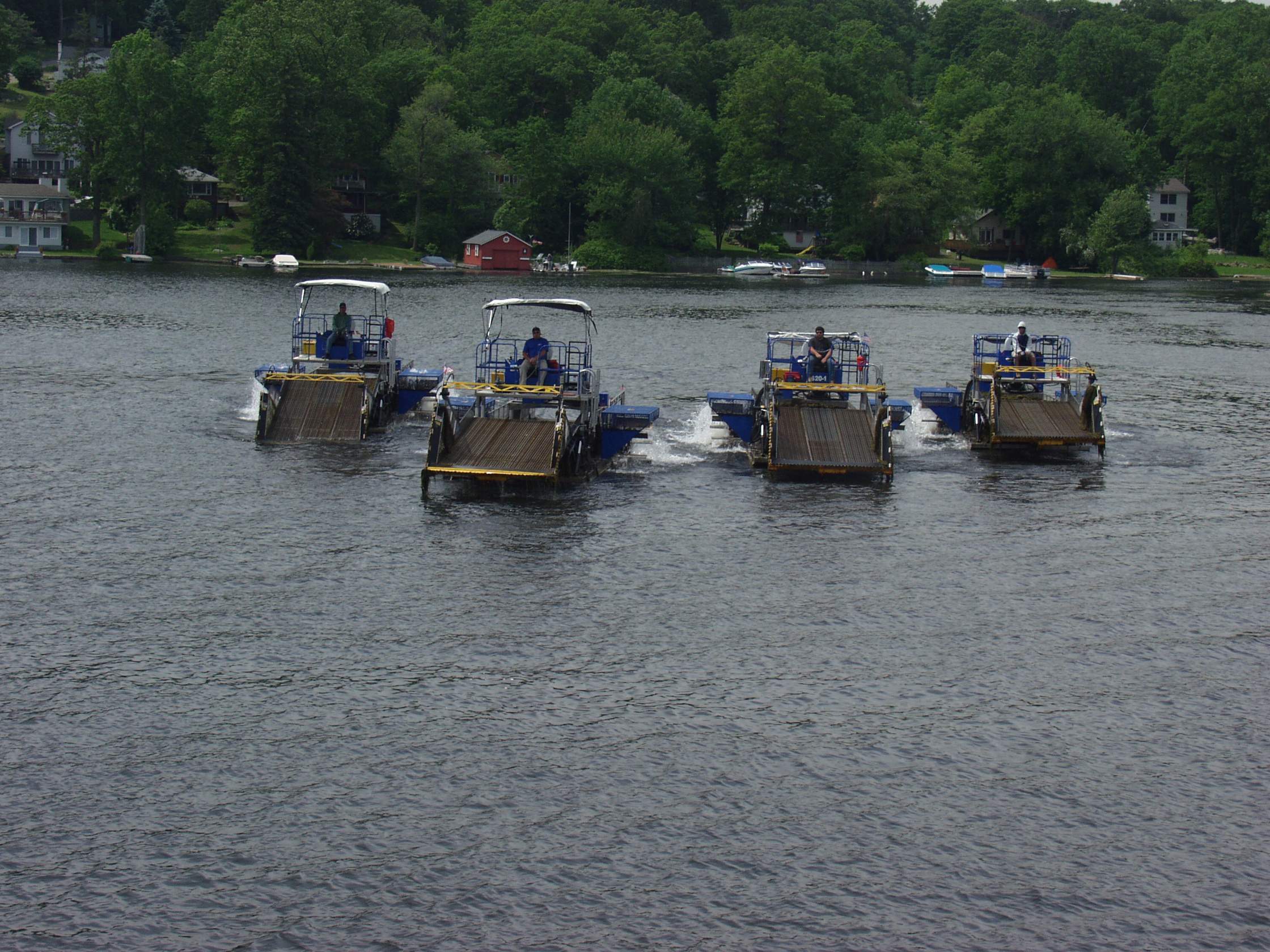
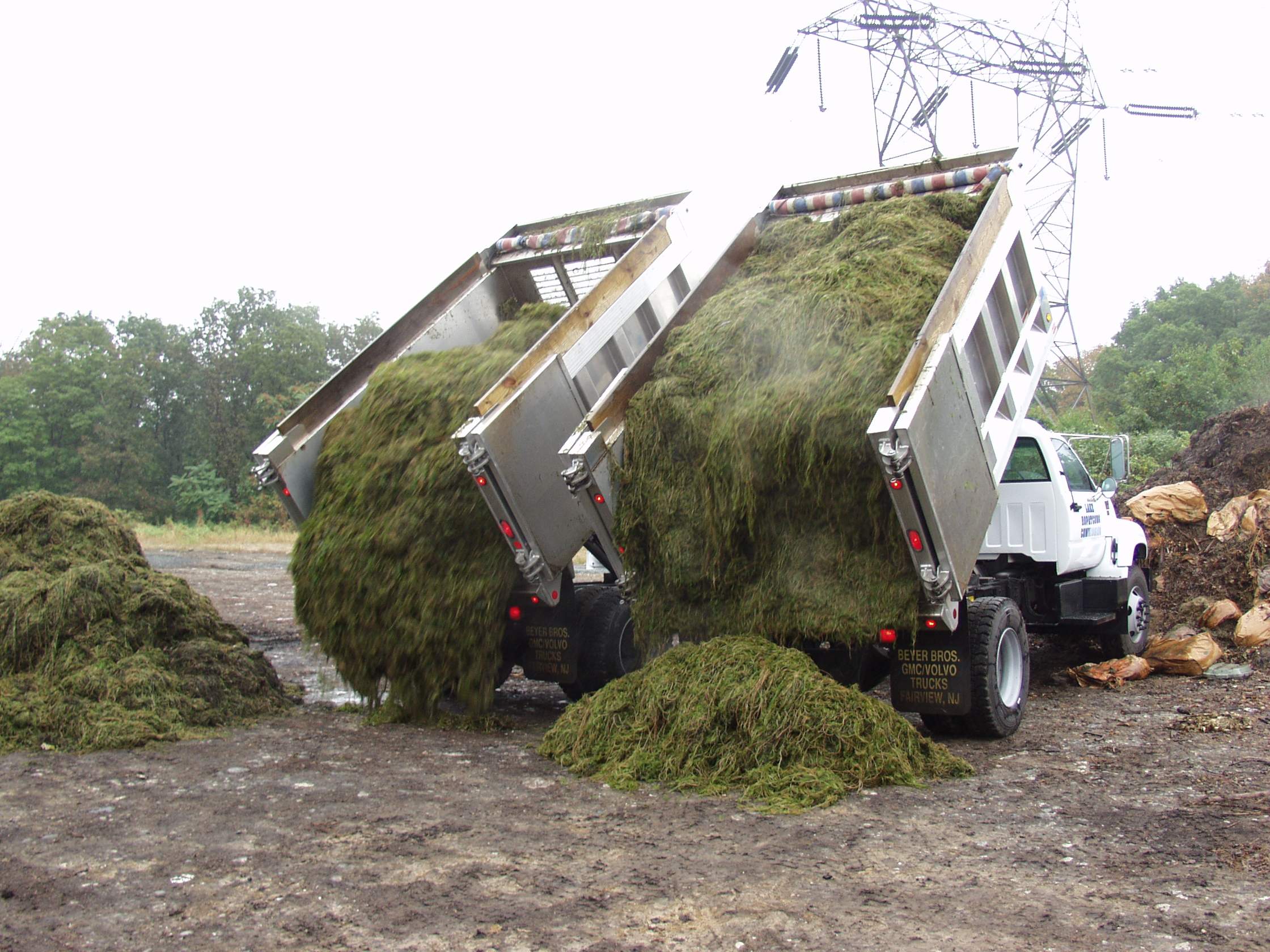
6/27/12 Update - Hopatcong State Park is now responsible for the harvesting of Lake Hopatcong. The harvesting equipment and State Park employees will be divided into two teams: Team “A” and Team “B”. Each team will consist of two large harvesters, one shore conveyor and one dump truck. However, only one harvester will be operating on each team until the maintenance repairs are completed on the other two harvesters. The harvesters will be launched from Hopatcong State Park to commence harvesting on or about July 2nd barring personnel and equipment problems as well as weather constraints, parts availability and any other unforeseen problems that may hinder safe and effective weed removal and transport. After the weeds are harvested, staff will transport the weeds to the Morris County Municipal Utilities Authority (MUA) in Mount Olive for recycling.
Team “A” will work from Lee’s County Park & Marina in Mt. Arlington and Team “B” will work from Ashley Cove in Jefferson. Team “A” will harvest mid-lake south of Sharps Point including River Styx and Crescent Cove to the Brady Bridge. Team “B” ”will begin harvesting at the north end of the lake in Woodport working south to Brady Bridge. Each team is responsible to harvest their areas from the east shore to the west shore. From these centers of the lake locations the remaining areas will be harvested: Lee’s Cove, Raccoon Island, Halsey Island, East Shore Estates, Nolans Point Area, Woodport Cove, River Styx/Crescent Cove, Henderson Cove, and additional areas as time and equipment allow.
This preparation to locate priority harvesting areas is subject to change due to “hot spots” of exceptional growth that may flare up and alter the needed areas of harvesting. As a result of these hot spots, selected areas may need additional harvesting and attention that could change the above schedule.
Harvesting equipment operators are scheduled to work from 7:00 AM until 3:30 PM with an hour lunch break. 7:00 AM to 7:30 AM will be spent refueling and performing required daily maintenance. Truck drivers are scheduled to work from 7:00 AM to 3:30 PM with an hour lunch break. Hours may have to be adjusted daily and weekly depending on weather conditions, staff needs, breakdowns or other conflicts that may affect a 40 hour work week and also minimize overtime. Weather and wind conditions will have to be checked daily. Also the types of weeds being cut, temperature, and underwater and surface hazards in the area will need to be checked daily. The four 9-foot harvesters will be used for harvesting. For efficiency purposes all operators will be cross-trained on all pieces of equipment, harvesters, shore conveyors, and dump trucks.
2012 Harvesting Goals
The primary goal is to achieve a quality and efficient operation to remove maximum bio-mass with as few floaters and property owners’ complaints as possible. The plan is to harvest the entire lake. Certain problem areas including but not limited to Woodport Cove, River Styx/Crescent Cove, Henderson Cove, Ingram Cove, Callaghan’s Cove, around Raccoon and Halsey Islands, East Shore Estates, Nolan’s Point and Hurd Cove may have to be harvested more than once during the season if possible. A continuing effort will be made to keep all navigational lanes open and free of weeds that may cause problems for propellers or jet drives. The natural areas surrounding Liffy Island, Roland-May Eves Inlet Sanctuary, Jefferson Canals and other smaller areas will remain untouched. Channel cutting will be done at small selected locations.
Prevent Water Chestnut from spreading to Lake Hopatcong
Help prevent the spread of an extremely aggressive, non-native aquatic plant called Water Chestnut that is rapidly taking over nearby Lake Musconetcong. First step is to educate yourself, your family and friends and everyone that enjoys Lake Hopatcong on how to identify the plant. Second, if you find the plant on the Lake Hopatcong, contact the Lake Hopatcong Commission immediately at 973-601-1070. View photos of the devastation caused by Water Chestnut on Lake Musconetcong and learn more ways to prevent the spread to Lake Hopatcong.
Learn more about the Lake Hopatcong stakeholders' efforts to identify and remove water chestnut on Lake Hopatcong. Articles are available at lakehopatcongnews.com and northjersey.com
Homeowner Weed Disposal
Each of the four lake municipality (Jefferson, Mount Arlington, Hopatcong and Roxbury) have different weed disposal arrangements for its residents. Check with your local municipality for details.
More about Weed Harvesting on Lake Hopatcong
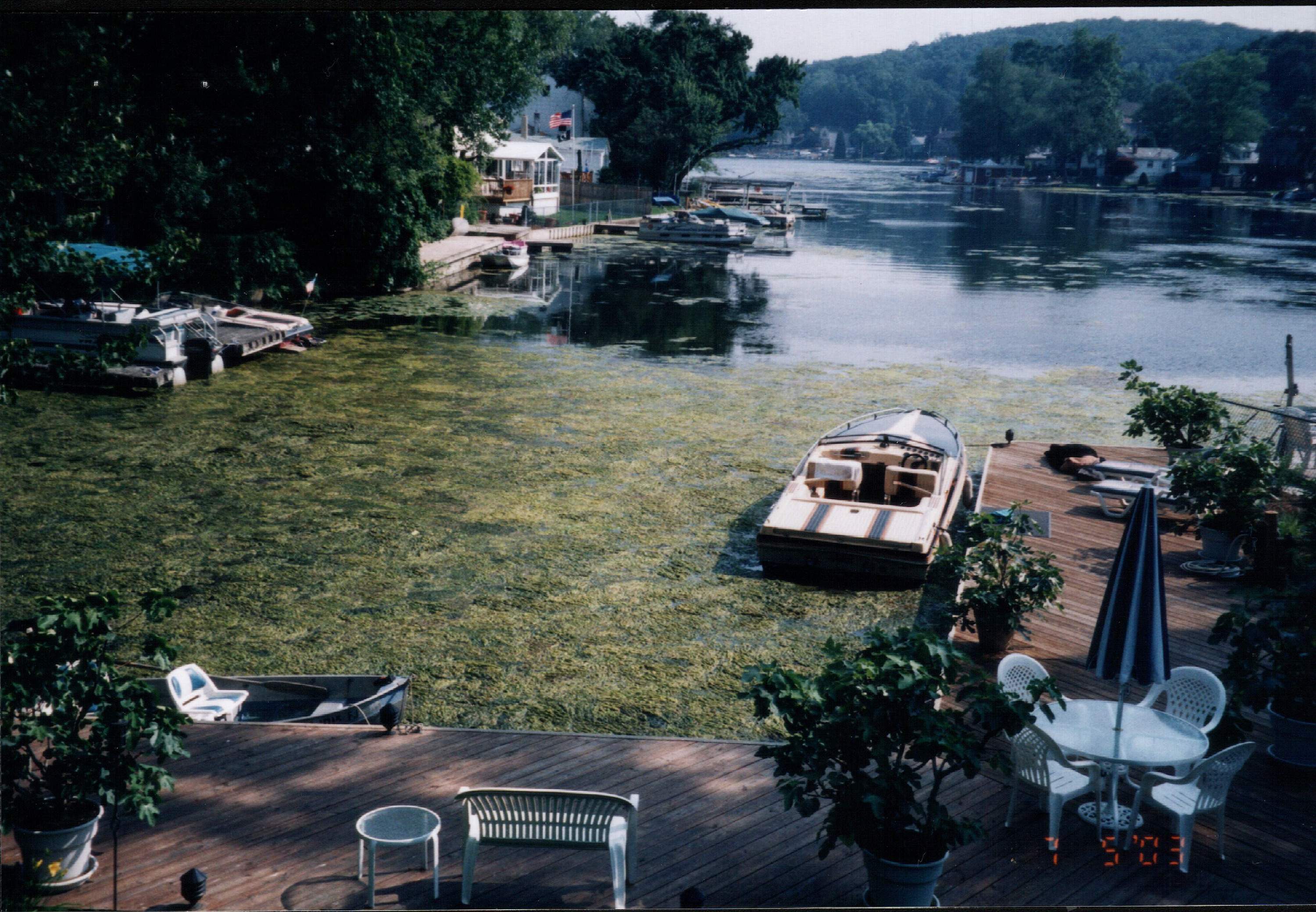
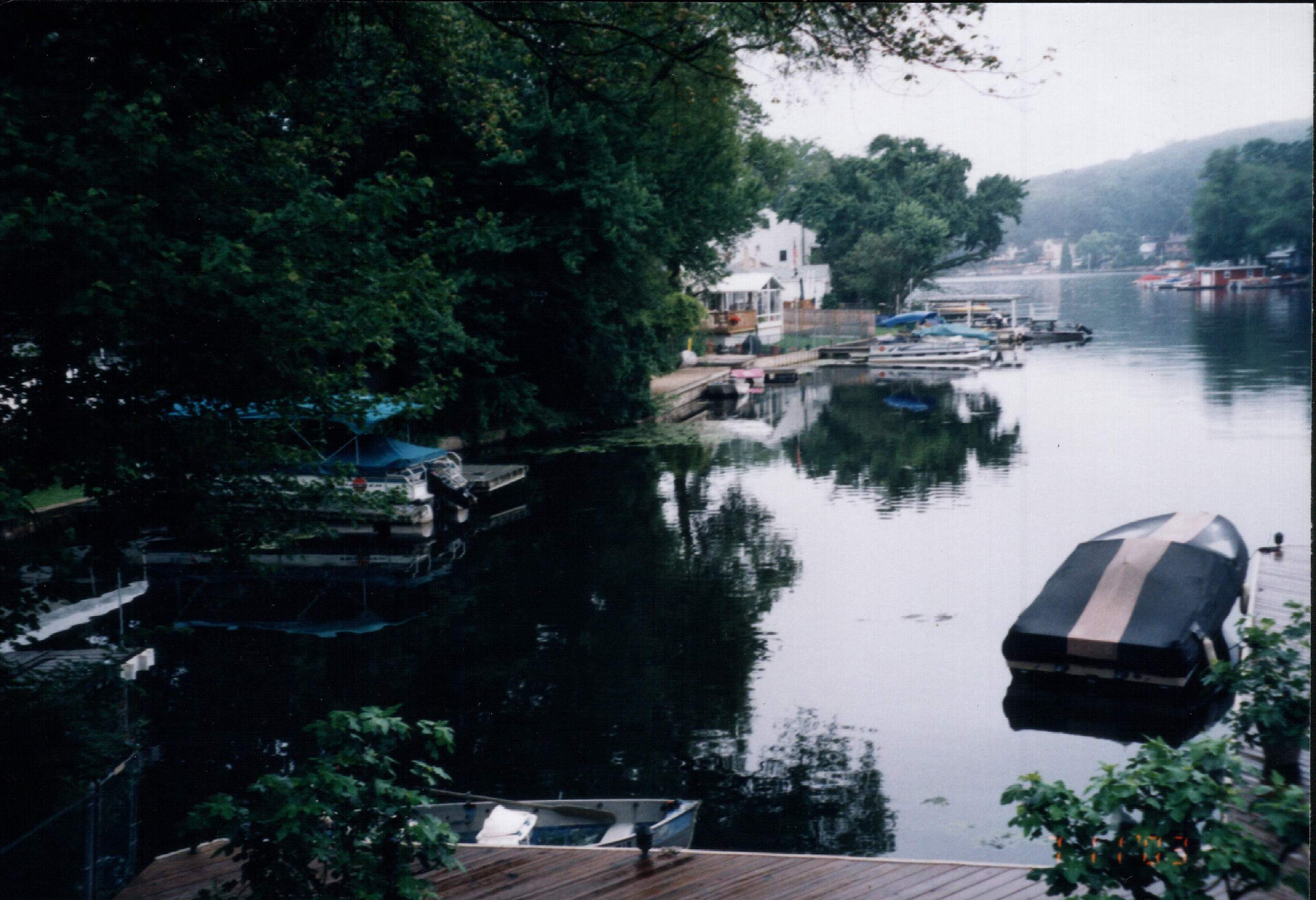
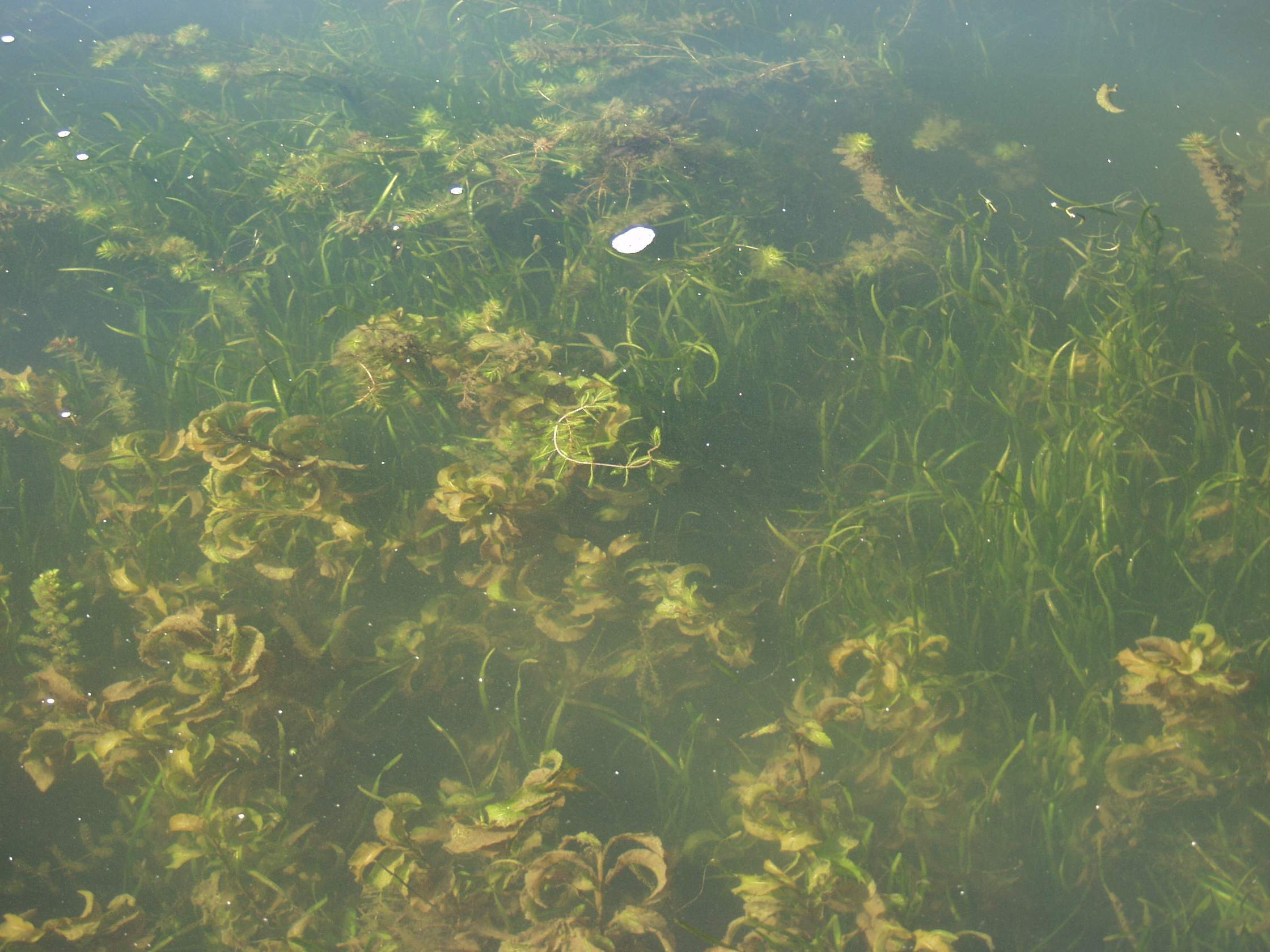
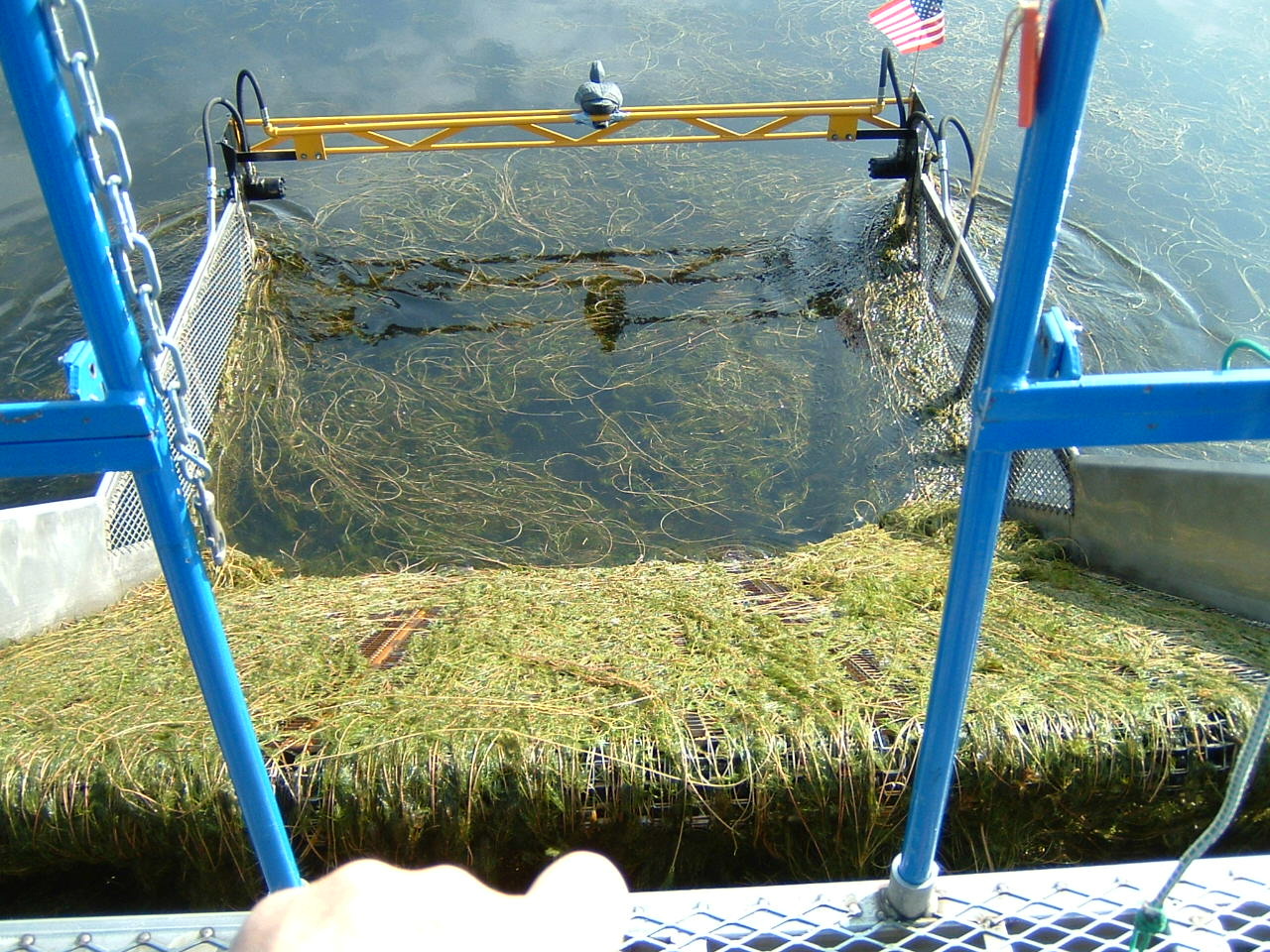
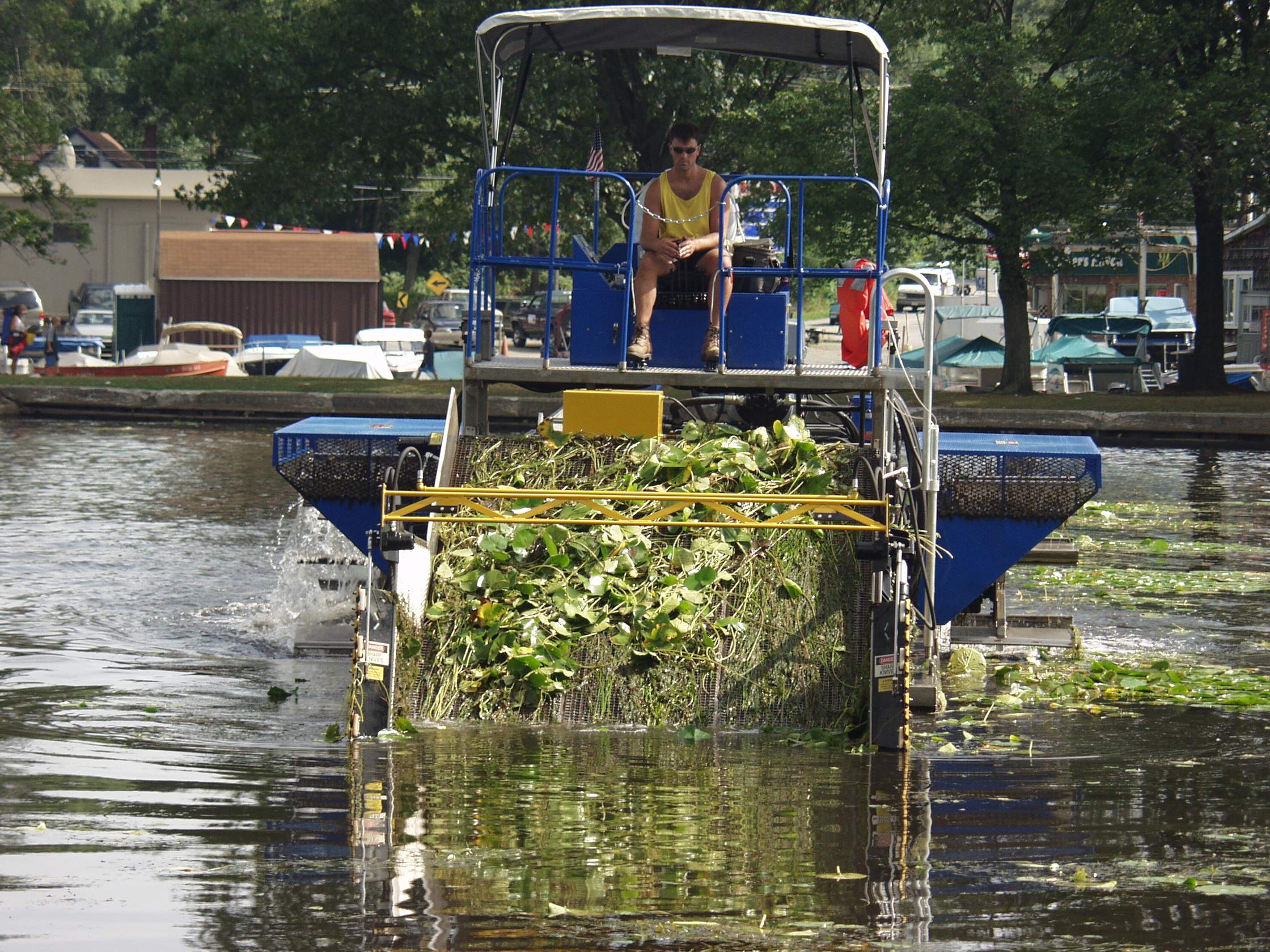
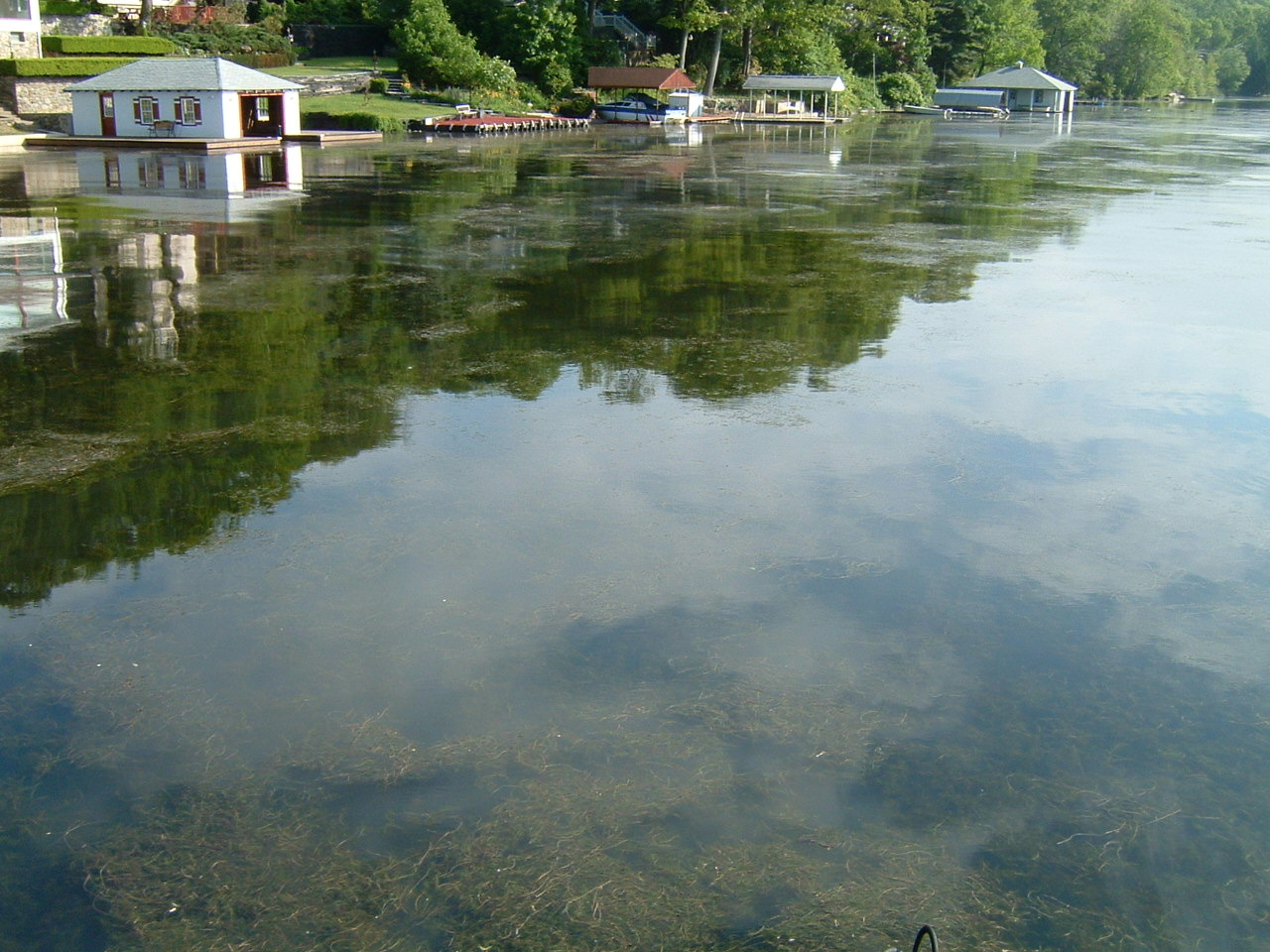
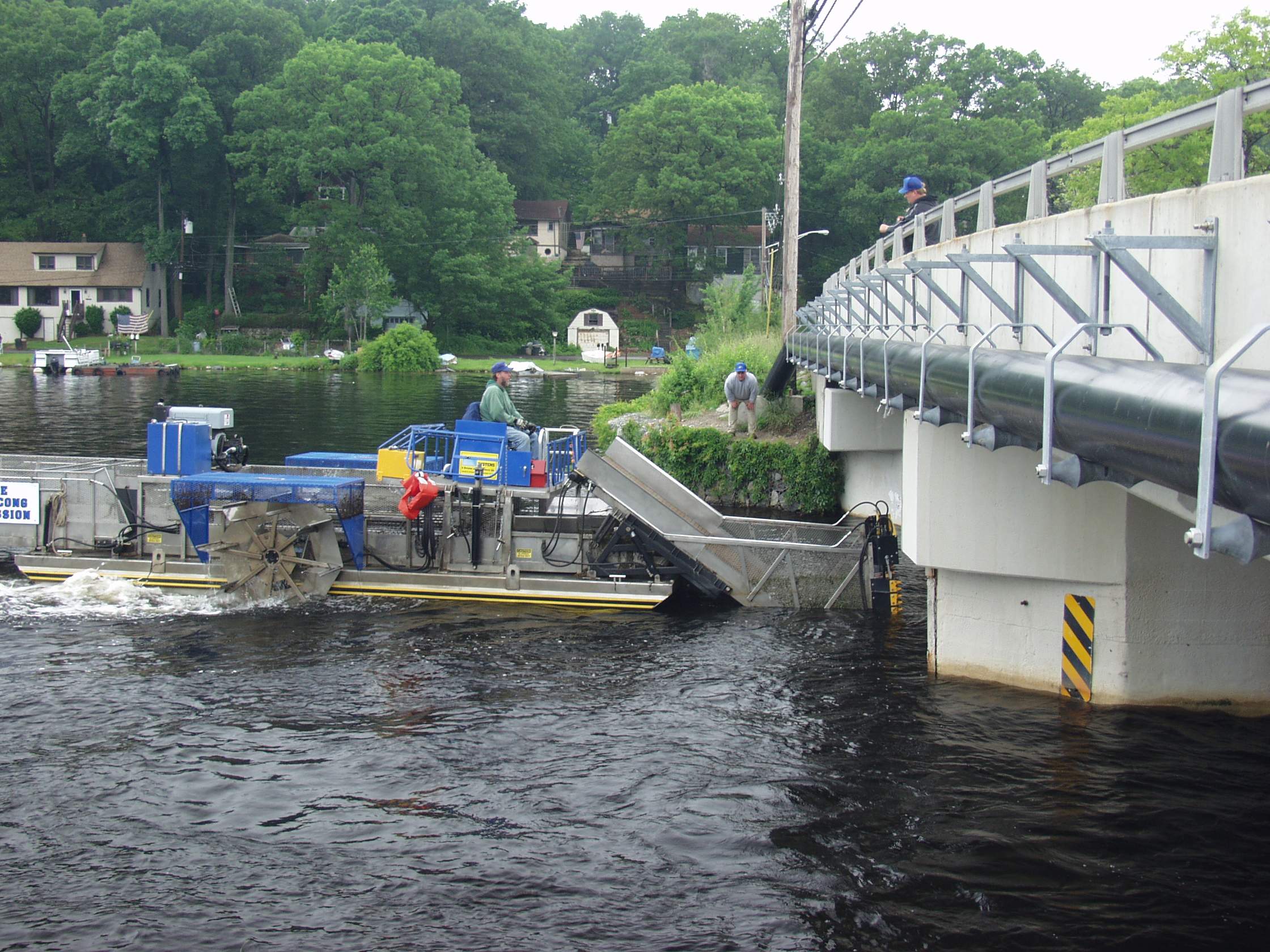
When there is adequate funding available, during harvesting season, two harvesting crews are deployed. Many shallow sections of Lake Hopatcong are susceptible to an abundant density of rooted aquatic plants, commonly referred to as weeds. To harvest these areas, the harvester operator cuts the weeds toward the center of an infested area typically closer to the middle of the lake and will remove weeds closer to the shoreline as the harvesting is completed in that area. Before moving to another section of the lake, the operator will pick up floating weeds (floaters) with the harvester near the shoreline. The operator will not harvest weeds near rocks, in shallow water or near bulkheads.
When cutting weeds, the harvesters move at less than 5 mph and move considerably slower if the water is choppy or if it is windy. As an example, on a beautiful sunny day with no wind or waves, it takes the harvester approximately 15 minutes just to travel from the Point Pleasant in Hopatcong to the beach at the State Park when the harvester is not cutting weeds. Under the same conditions, if the harvester was cutting one pass from Point Pleasant to the State Park beach, it would take at least 30 minutes to harvest that distance.
Click here to learn more about the benefits of weed harvesting. To learn why the weed growth in 2006 was so heavy, click here.
Are you interested in identifying the types of native and invasive aquatic plants found in Lake Hopatcong or to learn about notorious invasive species currently not found in the lake? If so, the Identification Manual of Aquatic Plants in Lake Hopatcong and Potential Future Invasive Species is a great learning tool.
To see a video on Lake Hopatcong harvesting click on the following link: LAKE HOPATCONG COMMISSION WAGES WAR ON AQUATIC WEEDS (NJ.com/Star-Ledger Video)
|
|
|
|||||||||
|
|
|
|||||||||
|
|
|
|||||||||
|
|
|
|||||||||
|
|
|
|
|||||||||
Updated: 07/05/2012